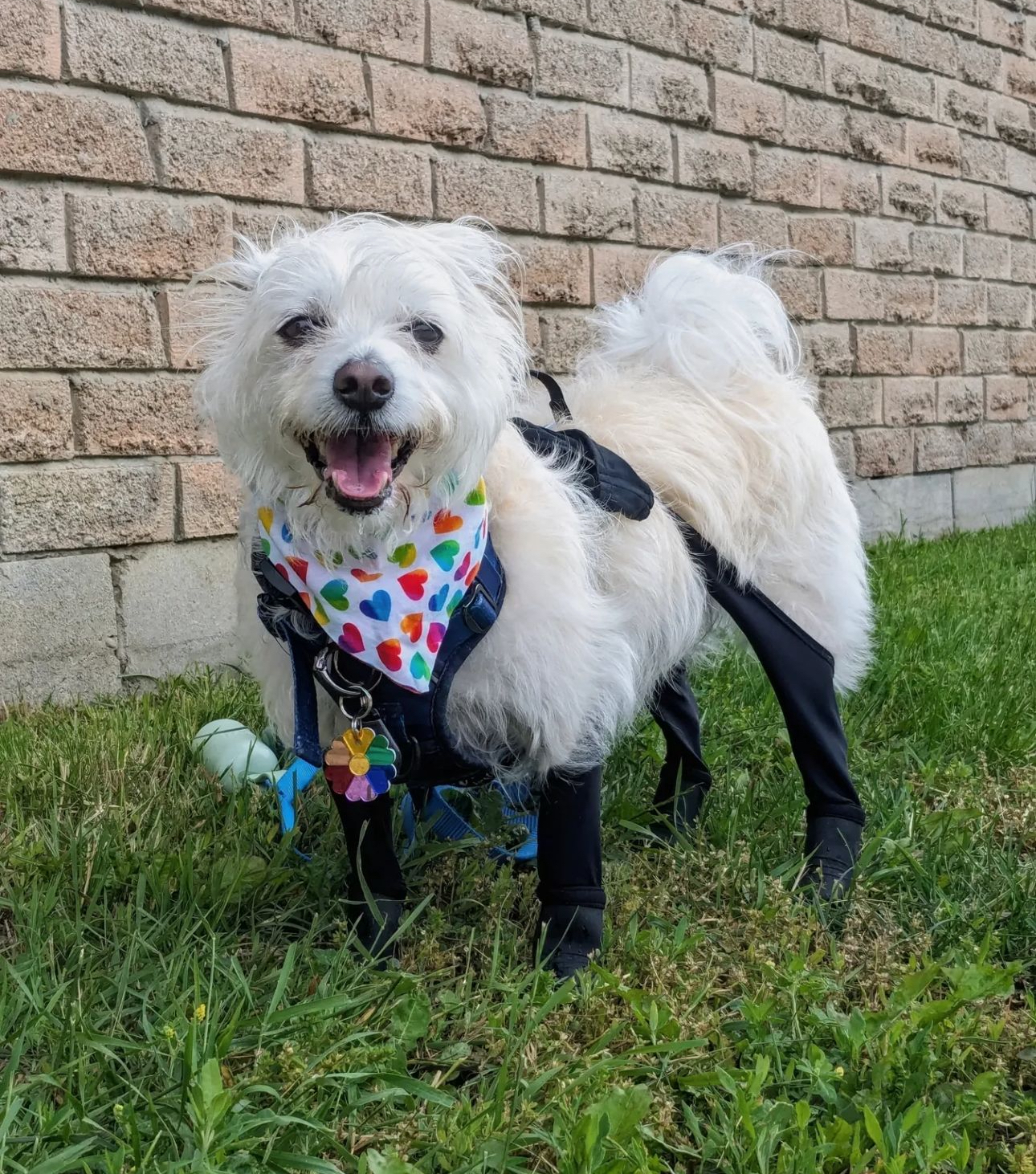
Finally, Foxtail Protection That Covers More Than Just The Paw
Finally, Foxtail Protection That Covers More Than Just The Paw
Traditional boots leave exposed fur where foxtails and burrs actually attach.
Based on 12,000+ owner reviews
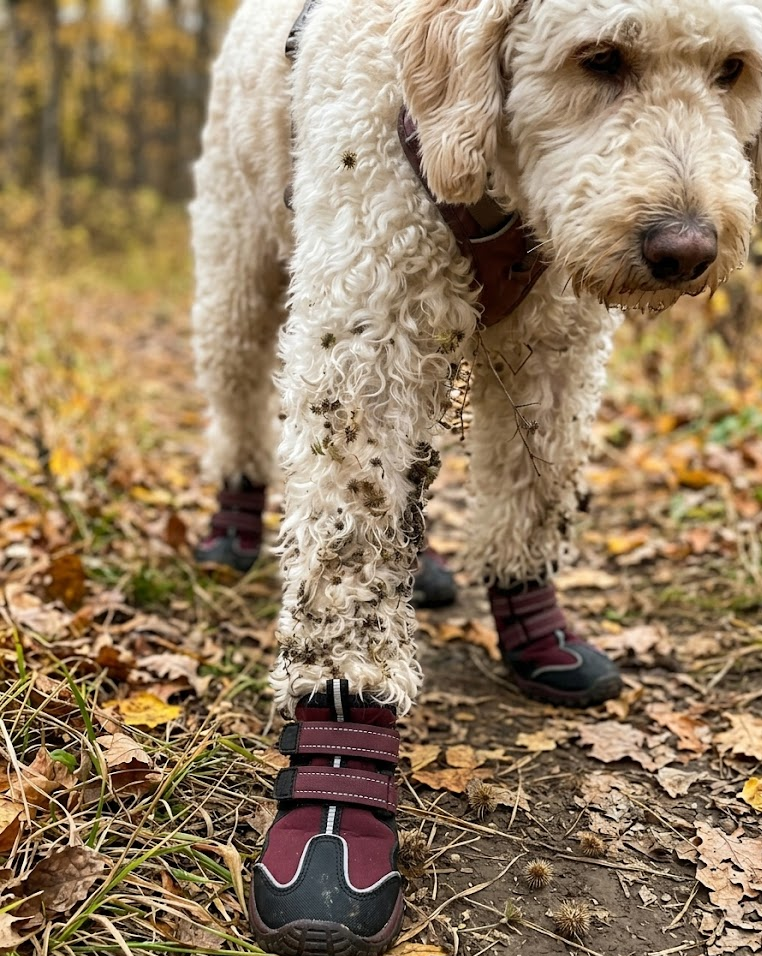
If you're searching for foxtail and burr protection for your dog, you've probably already tried boots.
And if you've ever finished a hike pulling burrs out of your dog's fur for 20 minutes, you've probably already noticed boots aren't really solving it.
Here's why.
The Part Traditional Boots Miss
Most dog owners assume boots protect their dog from foxtails and burrs. And they do, partially.
The paw pad is covered. The toes are covered. But the boot stops at the ankle.
Foxtails and burrs don't stop at the ankle.
Foxtails and burrs catch on leg fur first. That long, feathery hair above the boot, the ankle, the lower leg. That's where they attach. That's where they start their journey in.
If your dog is a doodle, this is an even bigger problem. Those tight curls are essentially Velcro for anything with a barb. Foxtails, grass seeds, sand burrs. They lock in instantly, and the curls hold them tight against the skin while the barb does its work.
A boot that ends at the ankle leaves all of that completely unprotected.
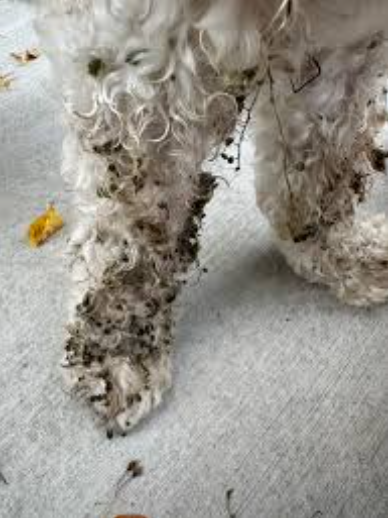
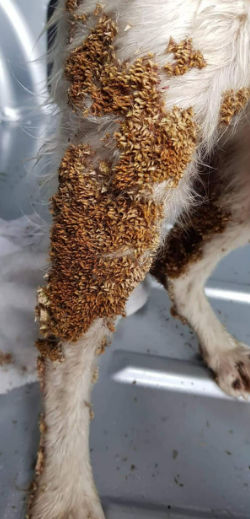
This Is A Different Category Entirely
Walkee Paws Dog Boot Leggings aren't a better version of dog boots. They're a different solution to a different problem.
Each boot is connected to a stretchy legging that extends up your dog's lower leg, held in place across the back by a patented suspender system and a simple chest strap. Because all four are connected, they can't be kicked off. Because the legging runs above the boot, there's no open ankle gap for debris to collect in. And because the fabric covers the lower leg all the way up, the fur that foxtails and burrs actually catch on is covered.
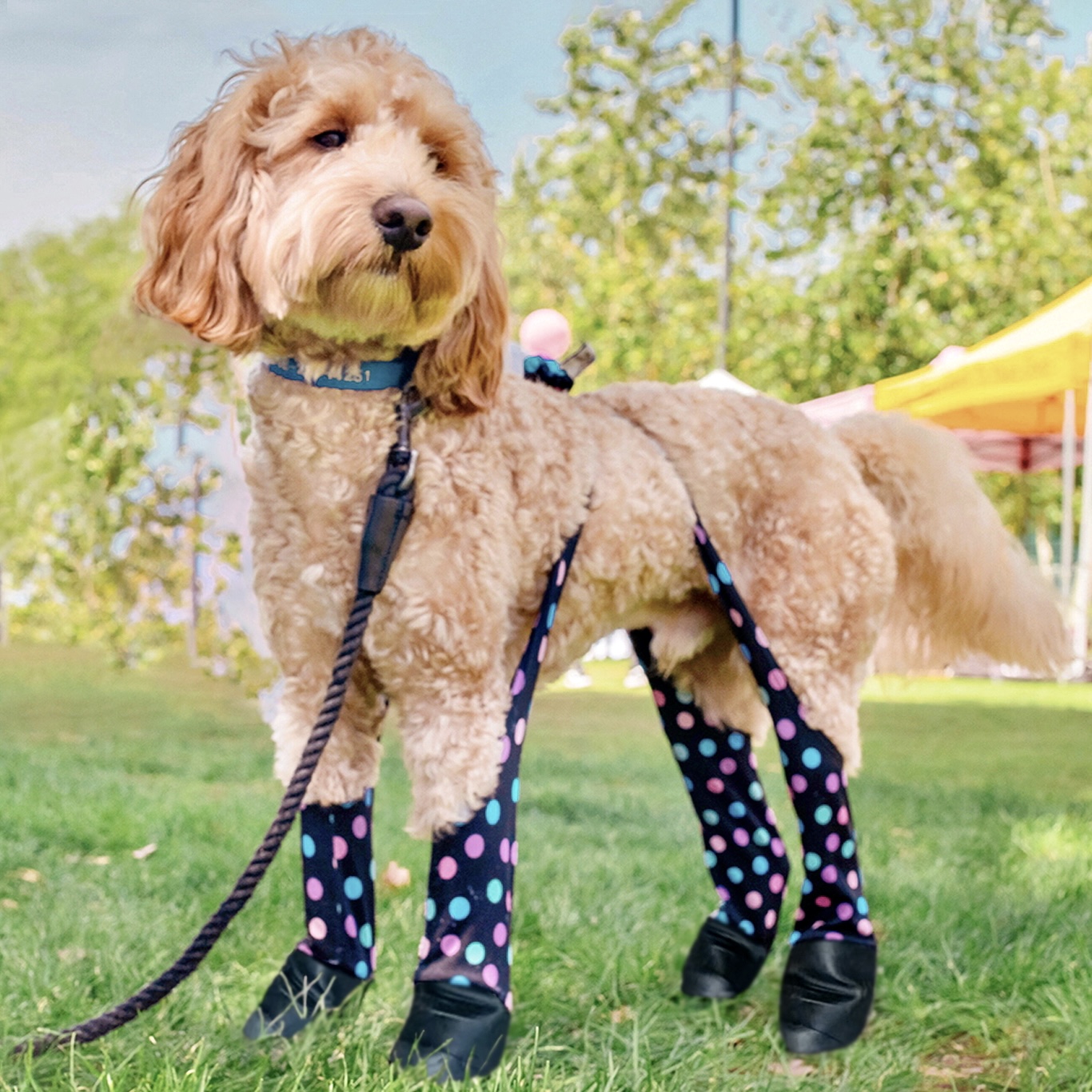
This is the difference between a walk you dread and a walk that's just a walk. Those tight curls that used to collect every burr on the trail? Covered. The feathering around the ankles that acts like a foxtail magnet? Covered.
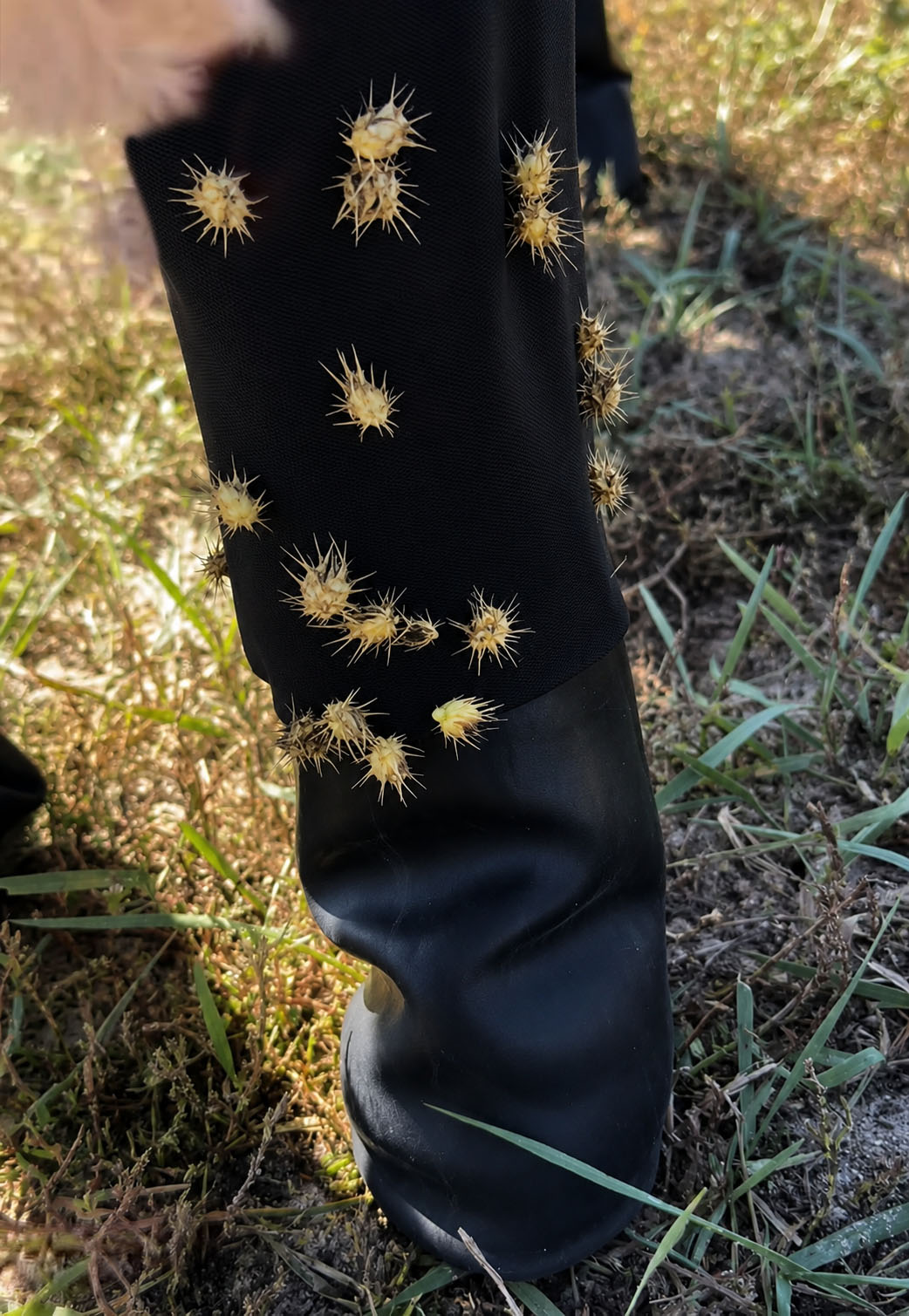
The foxtails and burrs that attach during the walk stay on the outside of the legging, where you brush them off at the door instead of digging them out of skin at the vet.
What's Actually Happening Once One Gets In
A foxtail's barb is designed by nature to travel in one direction only: forward. Every time your dog moves, the surrounding tissue contracts and releases around it, nudging the barb deeper. It doesn't need any help. Movement itself is the mechanism.
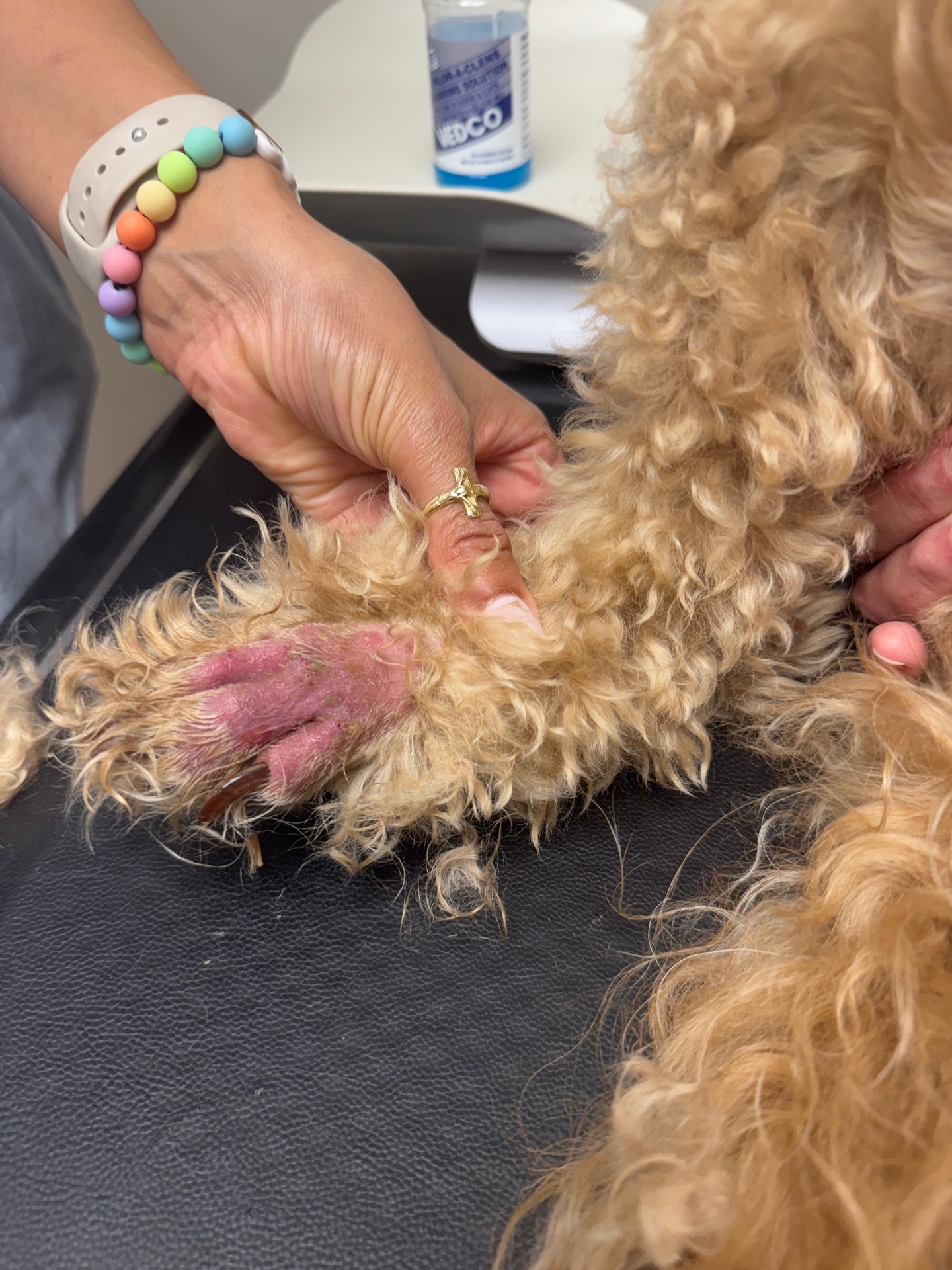
A foxtail that enters between the toes Monday morning can be in the leg muscle by Wednesday. Vets have found them in lymph nodes and lung tissue, sometimes weeks after the initial walk, nearly a foot from where they entered.
And through all of it, your dog may show almost nothing. A little extra licking. Slightly off on a walk. Easy to miss.
That's because hiding discomfort is hardwired into them. In the wild, showing weakness meant being left behind by the pack. So domesticated dogs are instinctively wired to push through pain and keep going no matter what's happening underneath.
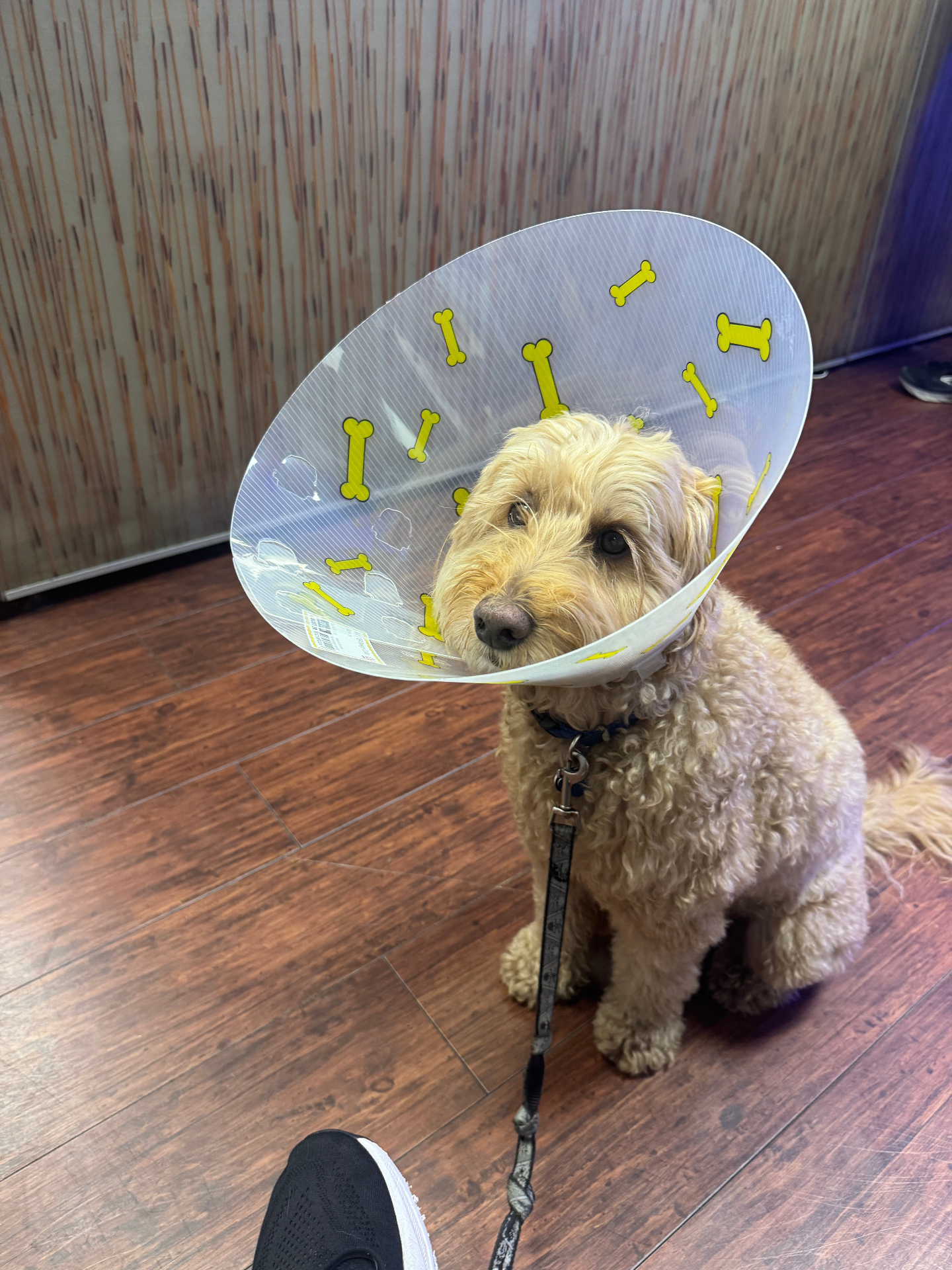
By the time the signs are obvious, the damage is already significant. Removal runs $500 to $1,500. And it's almost always avoidable.
The Other Problem With Boots: They Fall Off
You wrestle all four on, walk half a block, and come home carrying two boots while your dog trots ahead barefoot. The ones that stay on are often so stiff your dog high-steps like they're walking on hot coals.
And even when they do stay on, the boot opening sits right at the ankle, which is where foxtails and burrs can work inward. Seeds fall into the opening. Fur pokes out around the edges. The boot actually creates a collection point for the debris you were trying to block.
Which is why so many dog owners in foxtail and burr country eventually give up on boots entirely and go back to hoping the post-walk check catches everything.
It doesn't. Not always.
Before vs. After
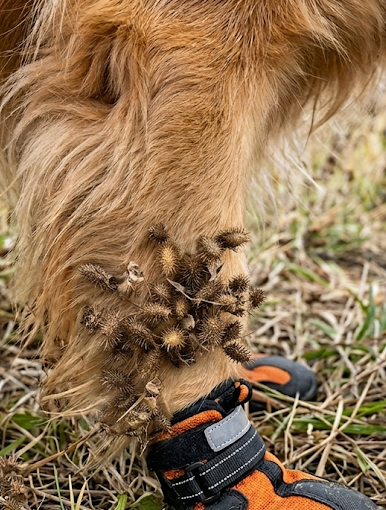
Pulling burrs out of your dog's fur for 20 minutes
Slip them on in under a minute. Burrs stay on the fabric. Paws, legs, fur, untouched.
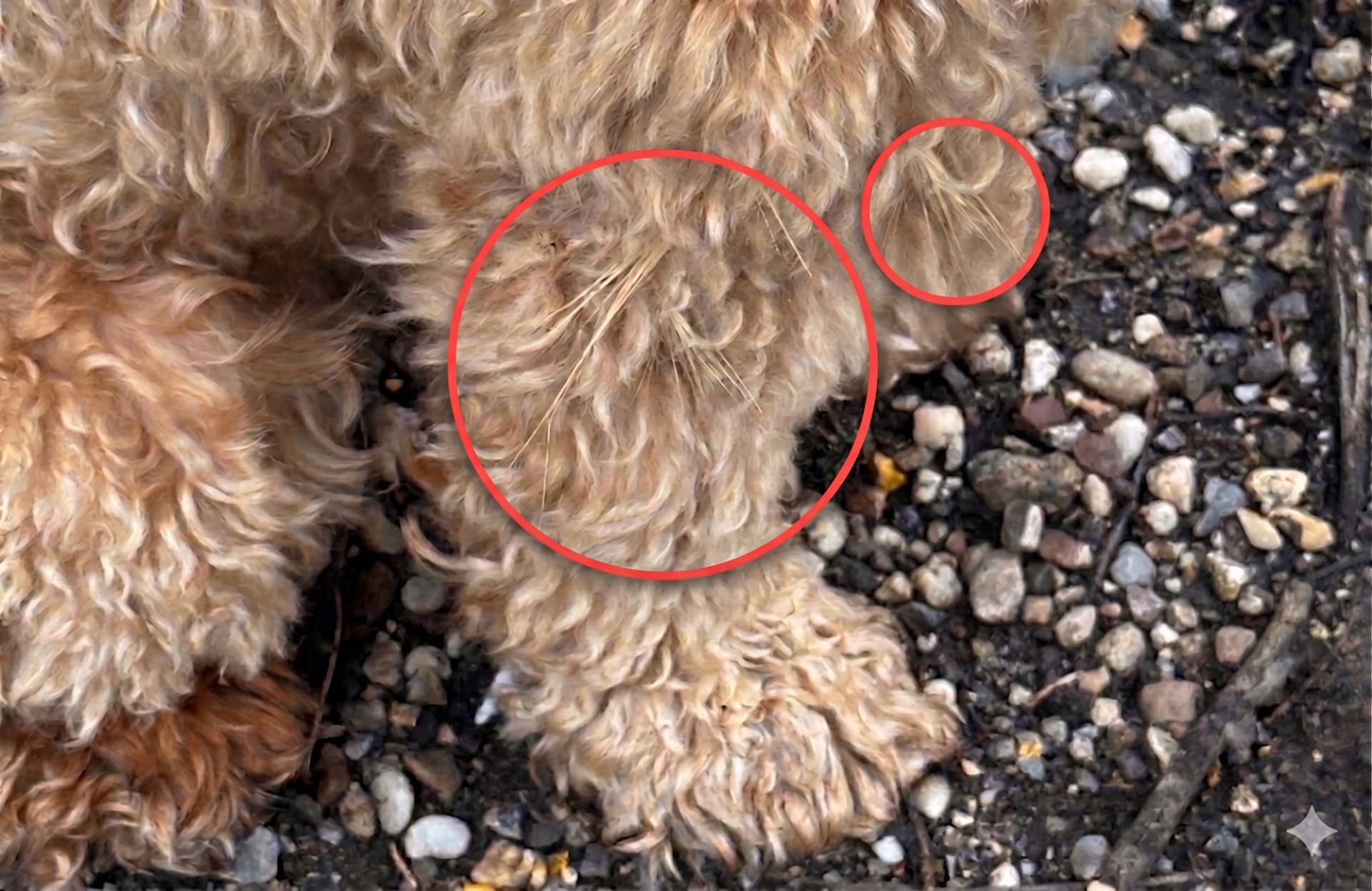
Foxtails and debris buried in fur, easy to miss on a post-walk check. Hard to remove once they're under the skin.
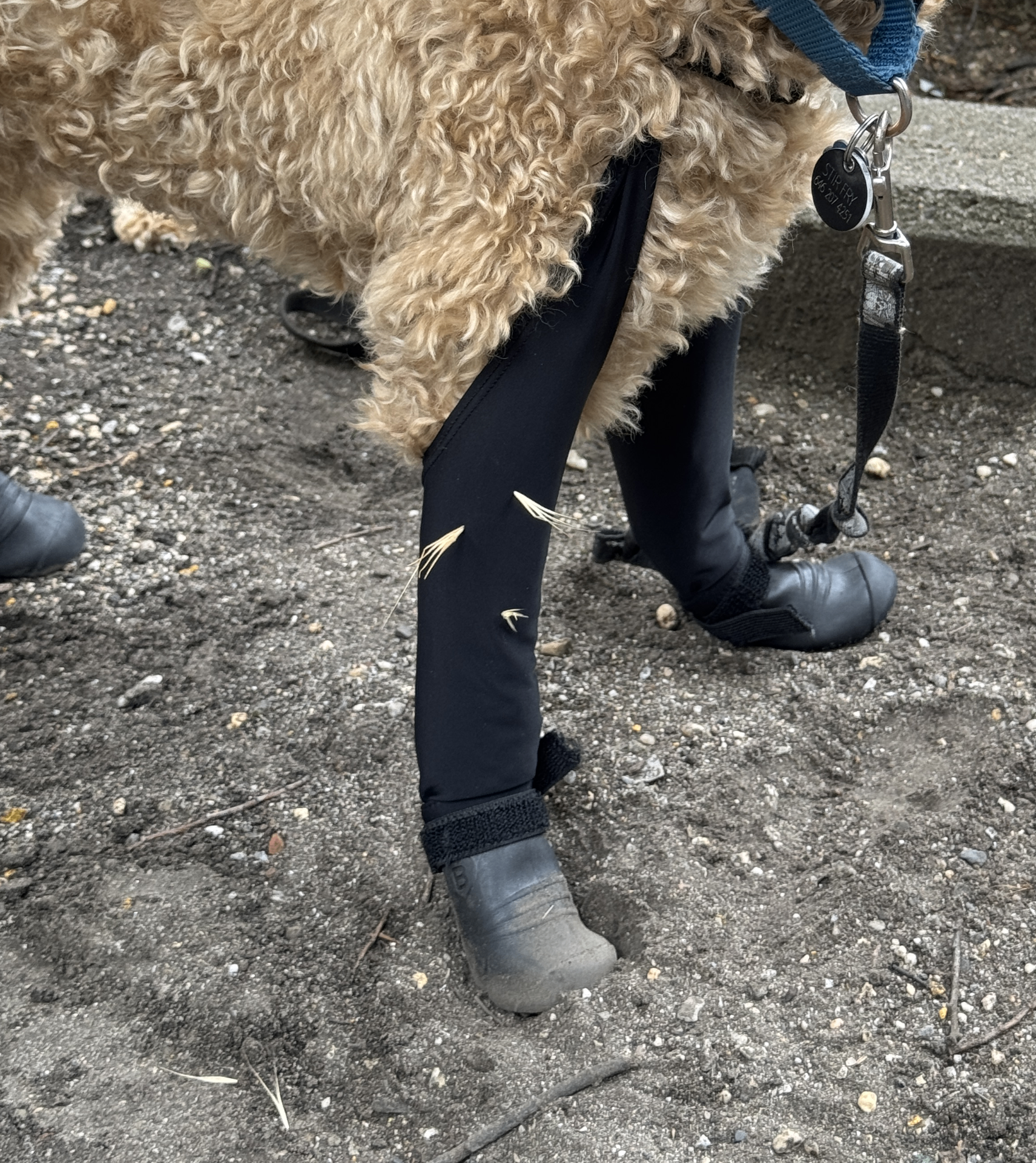
Paws and leg fur fully covered. Foxtails stay on the fabric, never reach the skin.
Who This Is For
If your dog walks trails or hikes with you, this is the gap in your protection you didn't know you had.
You've been solving half the problem. This solves the other half.
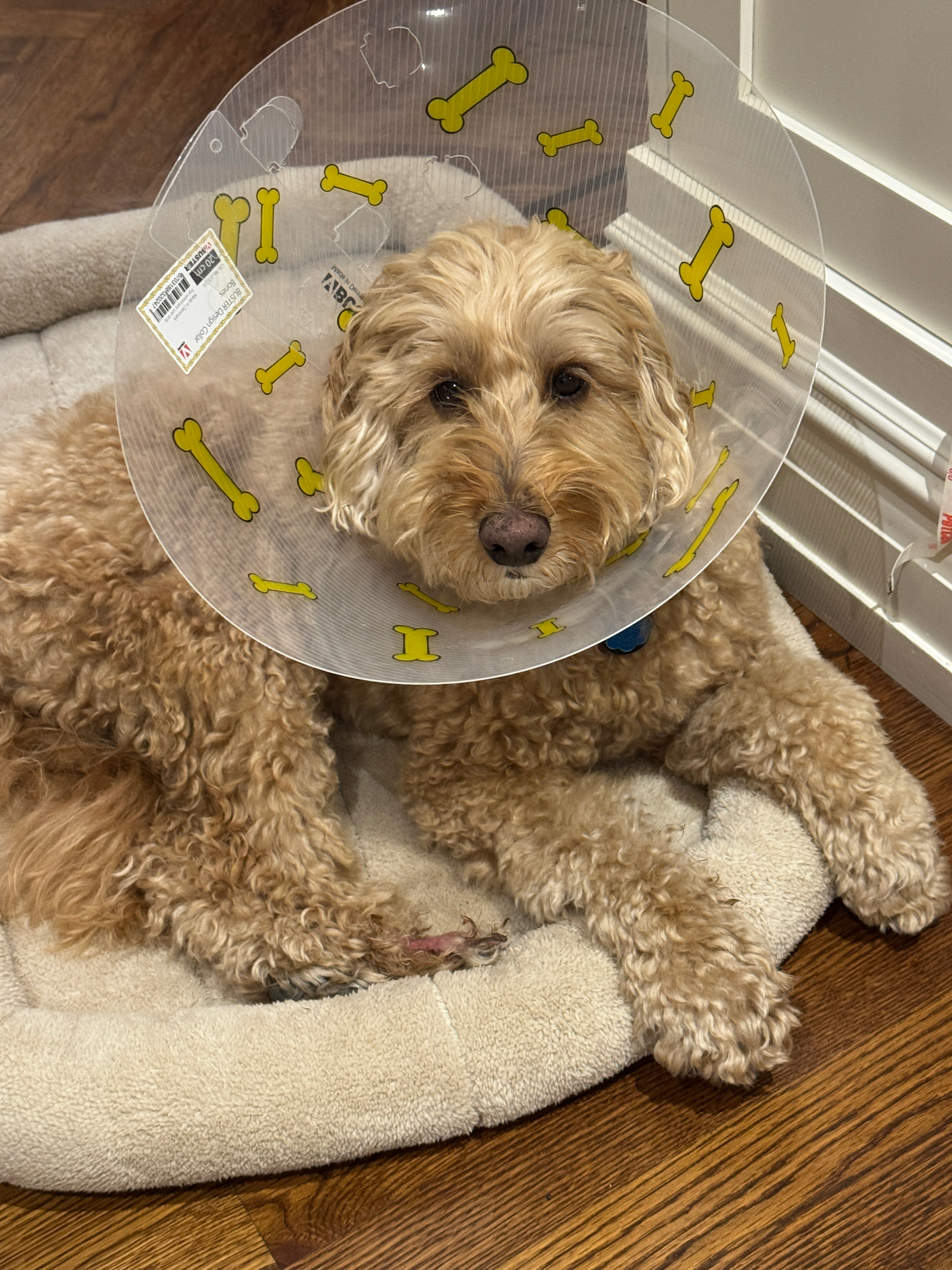
Want More Protection? Add The Raincoat.
For dogs who hike in wetter conditions or dense brush, Walkee Paws also offers a raincoat that pairs directly with the leggings. Together they cover your dog from toe to tail. Which means foxtails, burrs, mud, and wet brush have almost nowhere to make contact.
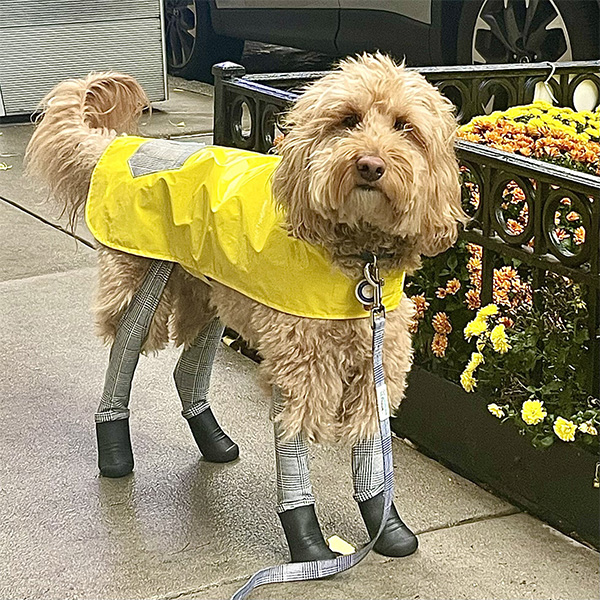
The Best Foxtail Protection For Dogs Covers More Than Just The Paw
You came here looking for foxtail protection that actually works. This is it.
Walkee Paws comes with an easy return and exchange guarantee. If it doesn't work for your dog, send it back. But given that a single foxtail removal runs $500 to $1,500, it pays for itself the first time it stops one from getting in.
Popular sizes sell out regularly, especially heading into hiking season. Tap below to check availability and grab your reader discount.